Stackable Degree @ UMPSA: Redefining Flexible Learning Pathways
In alignment with the Malaysia Higher Education Blueprint 2026–2035 (Shift 8: Flexible Education Pathways), Universiti Malaysia Pahang Al-Sultan Abdullah (UMPSA) is implementing the Stackable Degree model as part of its Flexible Learning and Micro-Credential (FLEXMC) initiative.
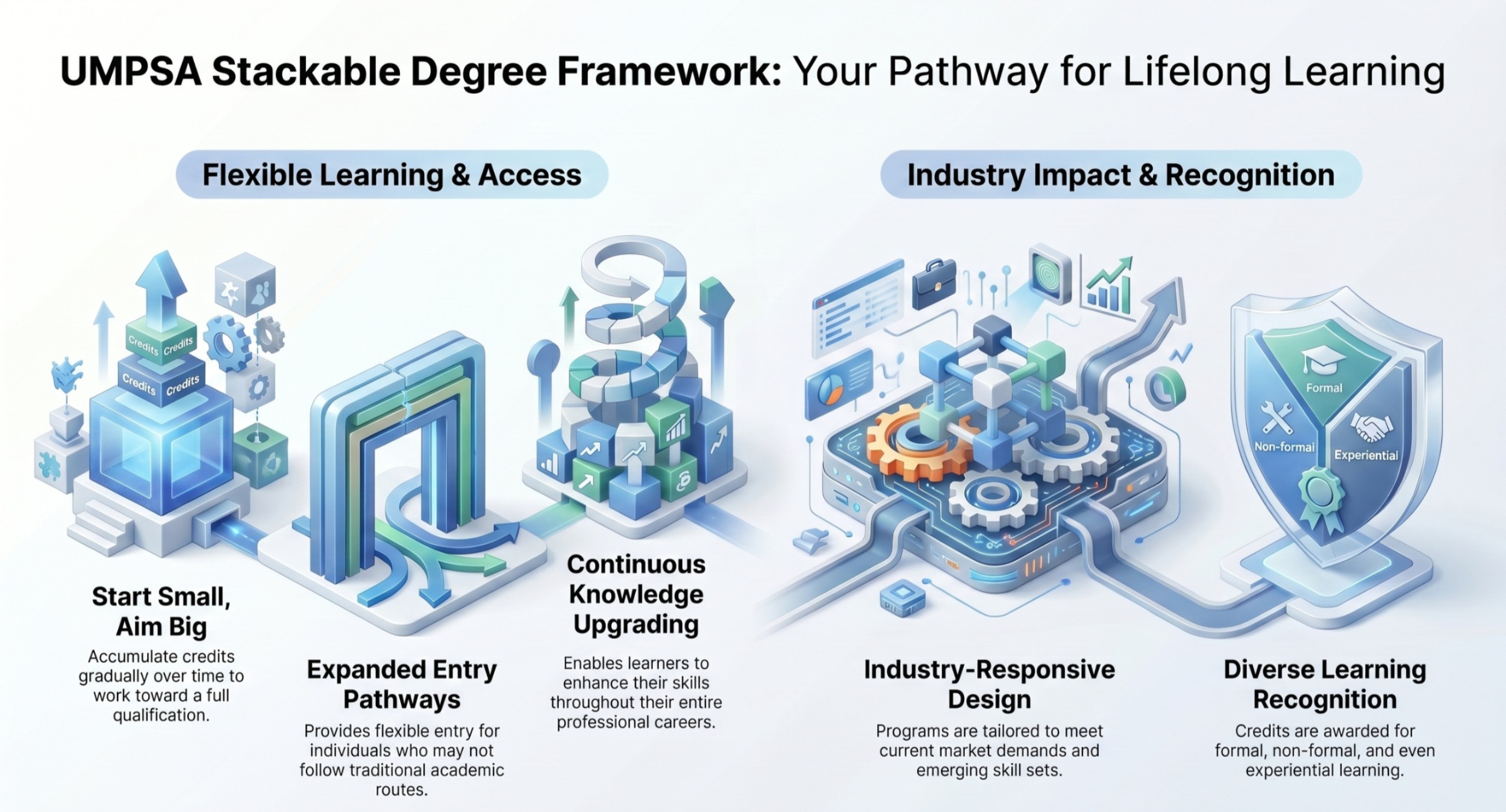
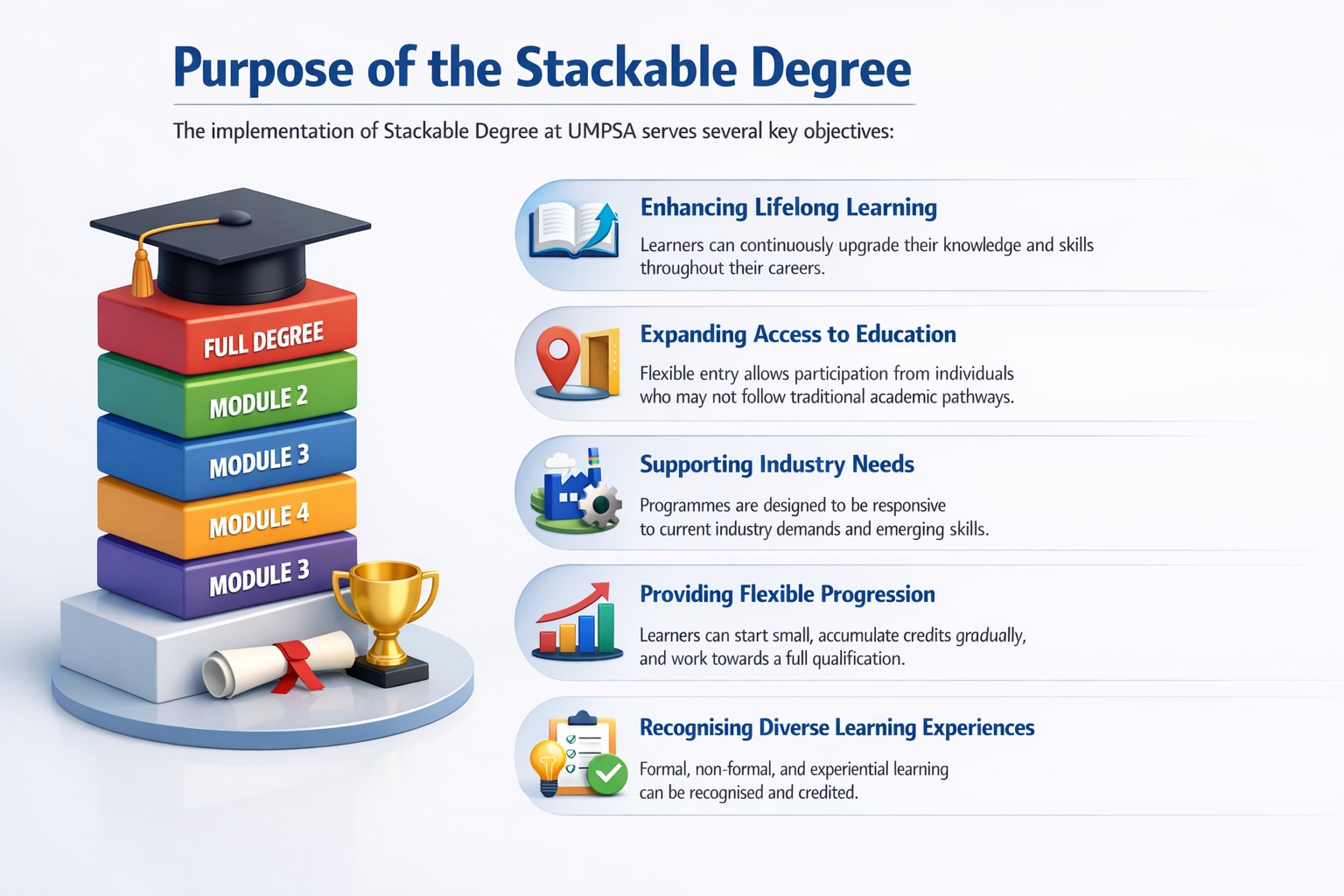
This approach transforms how programmes are designed and delivered by shifting from rigid structures to flexible, modular, and learner-driven pathways, while maintaining academic quality and institutional integrity. A Stackable Degree is a flexible qualification pathway where learners, accumulate micro-credentials over time, Earn academic credits for each completed component, combine or “stack” these credits and progress towards a formal qualification such as a diploma or bachelor’s degree.
This model supports multiple entry and exit points, allowing learners to begin, pause, and continue their studies based on their personal or professional needs.
Who is the Stackable Degree Designed For?
This model is inclusive and caters to a wide range of learners:
Working professionals seeking career advancement
Industry practitioners requiring specific competencies
Adult learners returning to higher education
Individuals without conventional entry qualifications
Lifelong learners pursuing personal or professional growth
Learners may begin with micro-credentials without meeting full programme entry requirements, but must satisfy these requirements before being awarded a qualification.
The Stackable Degree at UMPSA represents a forward-looking approach to higher education, aligning with national aspirations for flexible and inclusive learning.
By combining micro-credentials with structured pathways and strong institutional governance, UMPSA enables learners to:
Learn at their own pace
Build meaningful competencies
Achieve recognised qualifications
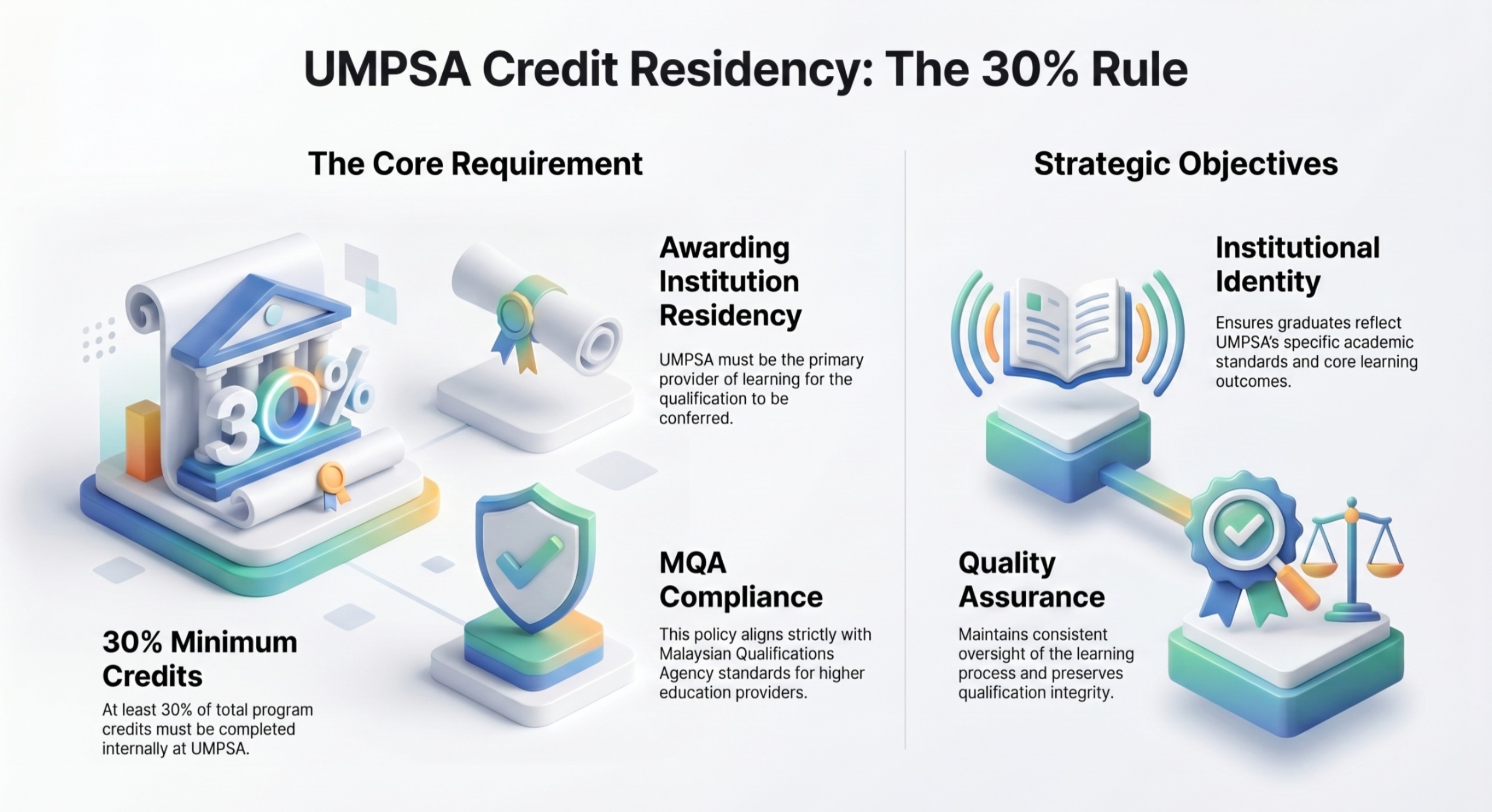
while ensuring that at least 30% of the learning experience is anchored within UMPSA, preserving the quality and value of the degree